Level-bracket-adjustment-at-sink-cutouts
The sink sits level in the drawings. In the field, the weight often drags the stone downward. The details found at hendersonville custom countertops nc bale watch explain the mechanics of support for every countertop installed in Hendersonville, NC. A heavy undermount sink creates a massive downward force on a granite slab if the hardware is not dialed in correctly. Gravity does not care about the beauty of a new installation. It only cares about the physics of a heavy basin filled with water.
The Physics of Sink Weight
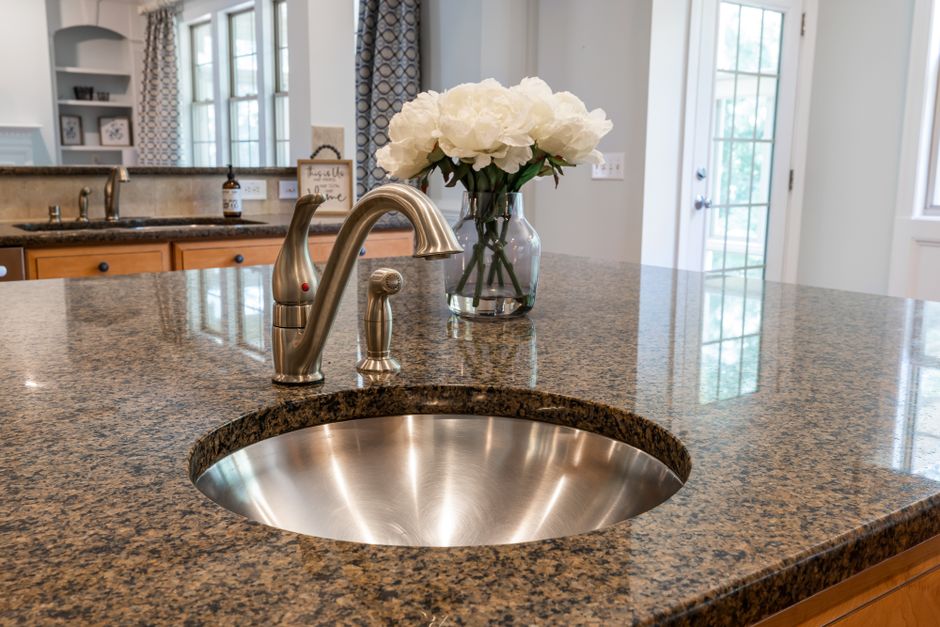
A standard undermount sink carries significant mass before a single drop of water enters the basin. Once filled, the load increases exponentially. If the mounting brackets sit too low, the weight pulls directly on the thin strips of stone around the sink cutout. This tension can lead to hairline fractures in quartz or even structural failure in thinner marble. The goal is to transfer that weight to the cabinetry rather than the stone itself. Mechanical adjustment of the level-bracket is the only way to achieve this transfer.
Bracket Adjustment and Torque

Standard clips often lack the fine-tuning required for a perfect fit. Using adjustable screw-style brackets allows for millimeter-level precision. When the sink is lowered into position, the hardware must be tightened until the sink is rigid. If there is any movement when pressure is applied to the rim, the support is insufficient. A slight overhang on the front edge can change the center of gravity, making bracket placement even more sensitive. The brackets must be positioned to catch the weight without putting side pressure on the sink cutout edges.
Material Considerations for Support
Different materials react differently to concentrated loads. A thick slab of quartzite handles compression well, but the thin strips around a sink cutout remain vulnerable to bending. Even with a solid surface, the lack of internal structure means the support must be absolute. The hardware should be checked after the initial installation and again after the sink has been used for several days. This ensures that any settling in the cabinetry or the sink itself is compensated for by the adjustable hardware.
Final Verification of Stability
Verification involves more than a visual check. Physical testing of the sink basin is necessary. A heavy weight should be applied to the bottom of the sink to simulate a full load. During this test, the stone around the cutout must remain static. Any deflection or movement indicates that the brackets are not properly engaged or are misaligned. Proper mechanical support prevents the sink from pulling on the stone, protecting the integrity of the installation in Hendersonville, NC.